
Dog car safety begins before the engine starts. A suitable travel harness, a clear seating plan and short practice sessions can make journeys more organised for both dog and driver. The goal is to reduce roaming inside the car and create a predictable routine without restricting the dog in an unsafe way.
Quick answer: measure your dog carefully, attach the restraint to a well-fitted body harness rather than a collar, check the connector and vehicle anchor points, and test the setup on a short stationary session before driving.
Measure before you buy
Product sizes are not universal. Measure the chest at its widest point and check the neck measurement where requested. Compare those numbers with the current seller chart instead of relying only on labels such as small, medium or large.
A travel harness should sit securely without rubbing behind the front legs. You should be able to check the fit with your fingers, while the dog should not be able to reverse out of it. Recheck after grooming, weight change or seasonal coat changes.
Plan the position inside the car
Choose one regular travel position, keep the dog away from driver controls and remove loose objects that could move during braking. The connector should give enough room for the dog to sit or lie comfortably, but not enough to climb into the front area.
Never attach a vehicle restraint to an ordinary neck collar. Sudden movement can put force on a small area of the neck. Follow the harness and vehicle instructions, and remember that local travel rules can vary.
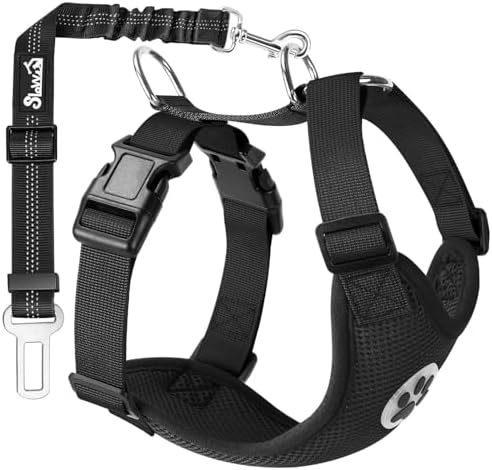
FEATURED PRODUCT
SlowTon Dog Car Harness and Connector
This harness-and-connector set is a useful option to compare for everyday car trips. Check the latest sizing chart, included parts and compatibility details on the Amazon listing.
- Harness-and-connector travel setup
- Adjustable fit for everyday journeys
- Confirm measurements and vehicle compatibility before ordering
As an Amazon Associate I earn from qualifying purchases. Price and availability may change.
Practise before a long journey
Introduce the harness at home, reward calm investigation and keep the first fitted sessions short. Next, let the dog sit in the parked car with the engine off. Build up gradually to a very short drive before attempting a longer route.
If the dog shows persistent distress, drooling, vomiting or panic, pause the plan and speak with a veterinarian or qualified behaviour professional. Travel sickness and fear need different solutions.
Use a pre-drive checklist
- Check the harness for wear, damaged stitching or distorted hardware.
- Confirm that every adjustment remains secure.
- Connect the restraint before opening another door.
- Carry water and schedule breaks on longer trips.
- Never leave a dog unattended in a warm or cold vehicle.
You can find more practical equipment guidance in our Product Reviews and Best Supplies sections.
Frequently asked questions
Can I use my dog’s walking collar in the car?
A body harness is the safer connection point for a restraint than a neck collar. Use only the attachment method described by the product manufacturer.
How much movement should the connector allow?
Enough for a comfortable seated or lying position, but not enough to reach the driver or exit unexpectedly. Adjust it while the car is parked.
Does a harness replace careful driving?
No. It is one part of a broader travel plan that includes appropriate driving, ventilation, breaks and supervision.
Final thoughts
The most useful travel setup is correctly sized, easy to check and familiar to the dog. Practise in small steps and inspect the equipment before every journey.
Pingback: Automatic Dog Feeder Guide: Portions, Schedules and Safe Setup – Velmora Pet
Pingback: Dog Car Seat Cover Buying Guide: Protection, Grip and Fit – Velmora Pet
Pingback: Winter Dog Coat Guide: Measuring for Warmth Without Restriction – Velmora Pet
Pingback: Deshedding Tool Guide: Choosing the Right Edge for Your Dog’s Coat – Velmora Pet