
An at-home dog grooming routine is easiest when it is calm, short and predictable. Regular coat care can help you notice tangles, dirt and changes that deserve professional attention, while giving the dog time to become comfortable with handling.
Quick answer: choose tools for the coat type, introduce them gradually, brush without pulling, keep sessions brief and use a professional groomer or veterinarian when the coat or skin needs more than routine maintenance.
Understand the coat before choosing tools
Short, smooth coats, long coats, curly coats and double coats do not need identical brushes. Ask a groomer which tool suits your dog’s coat and how often to use it. The wrong tool or excessive pressure can irritate skin and damage hair.
Check the coat in good light. Look behind the ears, under the collar, around the legs and other areas where friction can create tangles. Do not cut a tight mat with ordinary scissors close to the skin; a professional can remove it more safely.
Introduce handling in small steps
Begin when the dog is relaxed. Briefly touch one area, reward calm behaviour and stop before the dog becomes uncomfortable. Over several sessions, introduce the brush, the sound of running water and the surface where grooming will happen.
Use a non-slip mat and keep all tools within reach so you never need to leave the dog unattended. If the dog shows fear or attempts to bite, pause and seek help from a qualified professional.
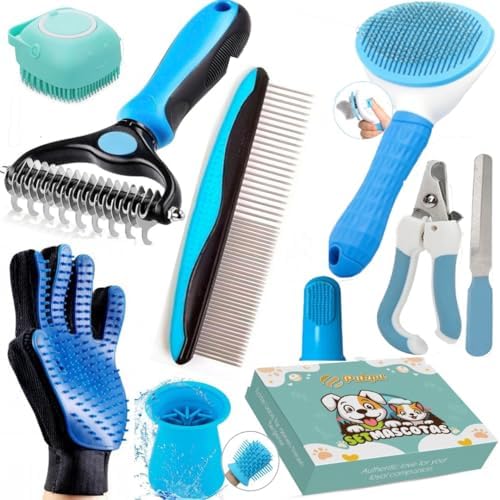
FEATURED PRODUCT
9-Piece Pet Grooming Kit
This nine-piece kit can serve as a convenient starting point for comparing several grooming tools in one set. Use only the pieces appropriate for your dog’s coat and the task.
- Nine-piece set for a broader home-care routine
- Multiple tools for brushing and coat maintenance
- Select each tool according to coat type and use gentle pressure
As an Amazon Associate I earn from qualifying purchases. Price and availability may change.
Follow a practical order
- Inspect: check the skin and coat before beginning.
- Brush: work in small sections, following the direction of the coat.
- Prepare for bathing: remove loose tangles before the coat becomes wet.
- Bathe when needed: use a dog-appropriate product and rinse thoroughly.
- Dry carefully: keep the dog warm and avoid excessive heat.
- Recheck: make sure no damp areas or tangles remain.
Nail trimming, ear care and work around the eyes require suitable tools and technique. If you are not confident, ask a groomer or veterinarian to demonstrate.
Know when to stop
Grooming is not the time to diagnose or treat skin disease. Contact a veterinarian about bleeding, swelling, a strong odour, pain, open sores, sudden hair loss, parasites or persistent scratching. Stop immediately if a tool causes discomfort or catches the skin.
For related routines, see Dog Care and compare supplies in Best Supplies.
Frequently asked questions
How often should I brush my dog?
Frequency depends on coat type, length, shedding, lifestyle and season. A groomer can help you choose a realistic schedule.
Should I bathe before brushing?
Loose tangles are often easier to address before bathing because water can tighten some mats. Follow advice for your dog’s specific coat.
Can one brush work for every coat?
No single tool suits every texture and task. Choose each item for the coat and use it gently.
Final checklist
Prepare the surface, inspect the coat, use suitable tools, keep the session calm and stop at the first sign of pain or fear. Consistency and gentle technique matter more than trying to complete every task in one session.
Pingback: Long-Line Dog Leash Guide for Safer Recall Practice – Velmora Pet
Pingback: Dog Nail Grinder Guide: Speed, Noise and a Calm Introduction – Velmora Pet
Pingback: Dog Life Jacket Guide: Buoyancy, Handles and a Secure Fit – Velmora Pet
Pingback: Slow Feeder Bowls for Dogs: How to Pick the Right Pattern – Velmora Pet